
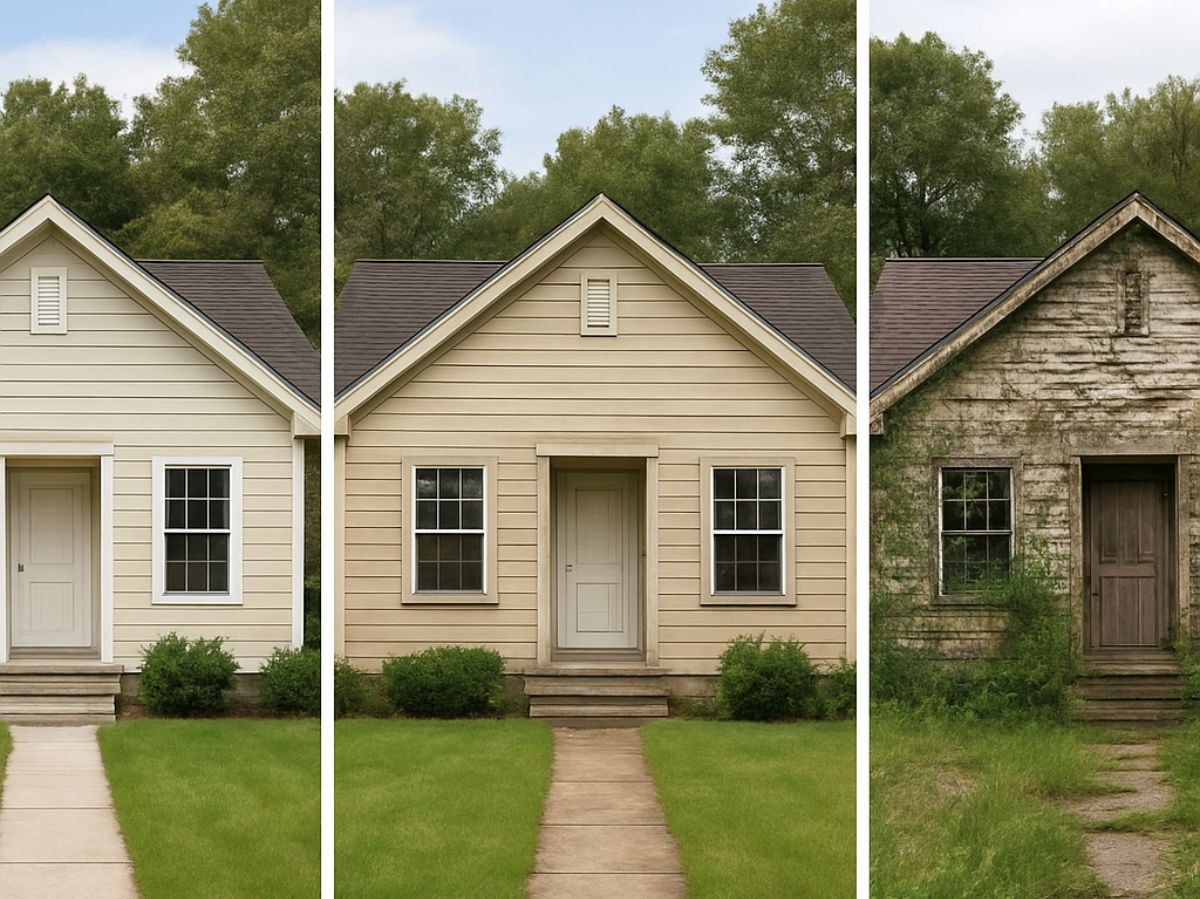
Year after year, the cold, humidity, and repeated frosts and thaws gradually degrade your property. Although this wear and tear of time happens naturally, we can step in to slow the process down to some extent.
In Quebec, homes are generally built with local weather conditions in mind. However, it isn’t rare for two houses built in the same year to age at different rates. This may be due to the level of maintenance, the location, the materials used, or the quality of the construction.
The Freeze and Thaw Cycle: The Most Underestimated Cause of Wear and Tear
A house’s main enemy in winter isn’t the cold itself, but the constant cycle of freezing and thawing.
When a small amount of water seeps into a crack in the foundation, a mortar joint, or a tiny gap in the cladding, it freezes, expands and then thaws. This recurring movement acts like an invisible lever.
Over time, cracks widen, joints crumble, and materials break down.
The problem is that this damage develops slowly, so it’s difficult to spot.
Winter Damp: The Silent Ager
Contrary to popular belief, winter isn’t always a dry season for a house. Mounds of snow against the foundation, ice in the gutters, and indoor condensation all create conditions conducive to high humidity levels.
Inside, damp air leads to condensation forming within walls, especially in poorly insulated or poorly ventilated homes. All this moisture can harm
- the wooden framework;
- the insulation;
- the gypsum board;
- and even the metal components, which can corrode.
While this type of damage sets in slowly, it can significantly speed up a structure’s aging process.
Not all Materials React to the Cold in the Same Way
Certain houses age more quickly simply because the materials chosen aren’t adapted to the rigours of winter.
Rigid cladding, poor-quality joints, or finishes that react strongly to temperature fluctuations are constantly under strain in winter.
For example, the wrong type of weatherstripping becomes stiff in the cold, cracks, and then allows air and water through. Badly installed cladding materials can shrink, warp, or crack.
Every successive winter places additional strain on the components. This shortens their lifespan over time!
Renovation Mistakes that Speed Up Ageing
Some renovations, however well intentioned, can cause the property to degrade prematurely.
After all, a home functions as a system in which heat, air, and humidity must remain in balance. Otherwise, problems may develop undetected in the short term.
For example:
1. Not properly distributing the insulation
Adding a lot of insulation to one area of the house without improving the insulation in other parts can create pockets of low temperatures behind certain walls or ceilings. Warm, moist air from inside the home can then condense in these cold zones, leading to moisture problems or mould forming within the building’s structures.
2. Tightly sealing the home without ensuring adequate ventilation
This can hinder the proper ventilation of the everyday water vapour produced in the home (from showers, cooking, and washing). This humidity can then accumulate and migrate to the walls, ceilings, or colder areas of the building.
3. Replacing the windows without correcting thermal bridges
This may result in condensation zone displacement. As new windows often boast better energy efficiency and warmth, moisture will no longer settle on the glass, but rather on the cooler surfaces of the adjacent wall. Over time, this can lead to problems with condensation, mould, or deteriorating materials.
Ideally, experts should carry out the work.
Poor Winter Maintenance: A Key Contributing Factor
Homes that suffer the most rapid deterioration are typically those that receive little to no winter maintenance.
Clogged gutters, masses of snow against walls, and failure to inspect the roof or ventilation outlets shouldn’t be taken lightly. These details directly impact the building’s condition!
Houses that stand up well to winter mainly have three things in common: a thermally efficient building envelope, suitable materials, and regular preventive maintenance. They aren’t necessarily newer or more luxurious, but they have been designed to withstand the rigours of cold weather rather than just endure them.